On 3 and 4 December, LIFE Maronesa was invited to participate in a Panel Discussion as part of the LIFE Platform Meeting event on the theme “Future-Proofing Europe’s Agri-Food Sector: Innovation, Resilience, Sustainability, and Competitiveness brought forward by the LIFE Programme”, which took place in Bologna, Italy, organised by ELMEN EEIG, a consortium providing technical and financial support for the LIFE Programme, and with the support of the host LIFE project LIFE23-CCA-IT-IMAGE LIFE – Improving the resilience of the Parmigiano Reggiano supply chain.
Around 40 LIFE projects, companies, non-governmental organisations, representatives of European and academic institutions, among others, were present.
The first day was dedicated in the morning to a panel discussion on the topic “How to make agriculture more climate and water resilient in today’s world. How sustainable agriculture can enhance EU food security”, while in the afternoon, participants were able to enjoy two field visits: one to the Ozzano Centre Livestock Farm managed by the Department of Veterinary Medical Sciences at the University of Bologna, which has an educational dairy barn equipped to carry out experiments on all aspects of animal health and welfare; the second was to Bio Sant’Anna, a dairy company specialising in organic Parmigiano Reggiano and related products, based on a vertically integrated and highly traceable supply chain.
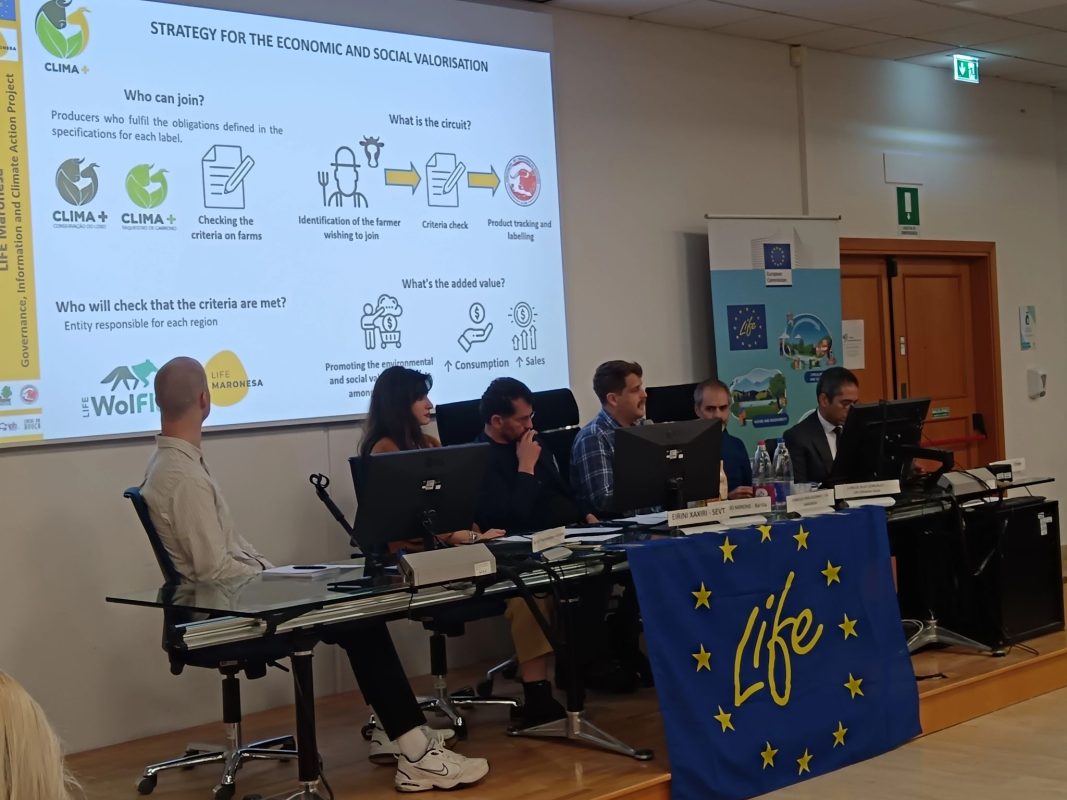
On the second day of the event, in the morning, the LIFE Maronesa team, represented by Henrique Mira Godinho, was invited to participate in the panel discussion ‘Leveraging digital tools and other innovative models, measures and techniques in the agrifood sector to boost competitiveness’, where the project manager highlighted the importance of digitalisation and other modernisation tools in product traceability throughout the production chain and in the fast and practical dissemination of production models to consumers. He also added a few words about the importance that technology and modernisation can bring in increasing the efficiency of the farmer’s work and improving and creating new strategies for processing, distribution and sales, thus enabling an increase in local and regional consumption by families with modest incomes.
After the second morning panel, ‘Streamlining sustainability standards and incentivising ecosystem services, including biodiversity-friendly practices and sustainable soil management,’ in the afternoon, the event organisers opted to hold three parallel workshops to encourage debate and discussion among all participants on the topics presented during the event.